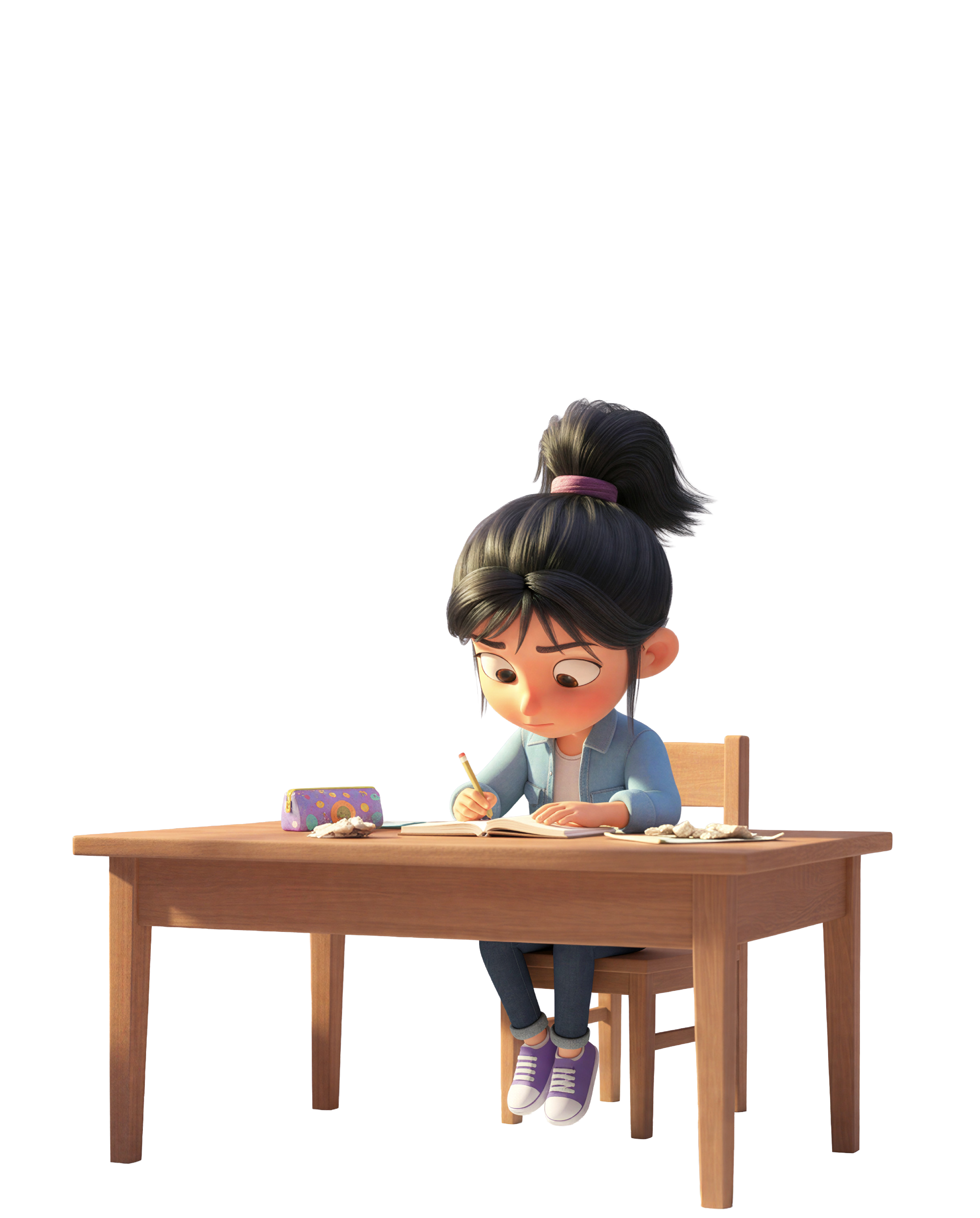
A child writing letters and numbers backwards is a common issue in early learning and often raises concerns for parents. Is this behavior normal? What are the underlying causes? In this article, we explore the reasons behind backward writing and provide practical solutions to help your child overcome this challenge.
What Is Backward Writing in Children?
Backward writing in children means writing letters or numbers in reverse, such as writing the letter “ب” as “د” or the number “3” as “ε”. This phenomenon is common among preschool and early elementary children.
Causes of Backward Writing in Children
There are several reasons why a child may write letters and numbers backwards, including:
- Normal Development of Visual Skills: A child’s brain is still in the early stages of learning to distinguish different directions, and they may perceive letters or numbers as the same regardless of their orientation.
- Incomplete Development of Visual Perception: The ability to distinguish between right and left, or up and down, develops over time, and a child may need more time to learn how to differentiate directions.
- Learning Difficulties (Dyslexia): In some cases, backward writing may indicate learning difficulties such as dyslexia. However, this does not mean that every child who writes backwards has this issue.
- Lack of Practice: Children who do not practice writing regularly may have difficulty remembering the correct orientation of letters and numbers.
Effective Solutions to Help Your Child
There are several solutions to help your child write correctly, including:
- Patience and Understanding: Remember that backward writing is a natural part of the learning process. Avoid getting upset or scolding your child, and provide support and encouragement instead.
- Using Visual Aids: Use flashcards that show letters and numbers correctly, and you can also use colors to indicate direction, such as drawing an arrow to show the proper writing orientation.
- Hands-On Practice: Encourage your child to practice writing regularly, starting with simple letters and numbers, and then moving on to more complex ones.
- Educational Games: Use games that teach your child to distinguish directions, such as puzzles or building toys.
- Enhancing Visual Perception: Provide your child with activities that enhance visual perception, such as matching shapes or distinguishing between similar images.
- Collaborating with the School: Communicate with your child’s teachers to see if the issue persists at school as well. Teachers can also provide additional advice and support.
- Consulting a Specialist: If the problem persists for a long time or is accompanied by other learning difficulties, it may be helpful to consult a learning difficulties specialist.
Additional Tips:
- Positive Reinforcement: Praise your child when they write correctly, even if it’s just a small step.
- Repetition: Repeat exercises that help your child distinguish between directions.
- Be a Role Model: Write in front of your child and explain how to form letters and numbers correctly.
Backward writing is a natural stage in the learning process, and with patience and support, your child can overcome it. By following these tips, you’ll help your child develop proper writing skills and build self-confidence—start applying these strategies today!