







Brain-Building Activities for Children Ages 3–7
In early childhood, a child’s brain grows at an incredible rate, forming billions of neural connections that determine their future abilities in learning, focus, creativity, and emotion regulation. Children don’t need complex teaching or expensive tools… they need simple, fun, and repetitive activities that scientifically and effectively stimulate their brain. In this article, you’ll find the best activities suitable for ages 3–7 that studies confirm support cognitive, language, and social development.
1) Sensory Activities
These activities are the main fuel for brain growth.
Practical examples:
- Playing with sand or water
- Dough and clay
- Colored beans for sorting
- Finger painting
Benefits:
- ✔ Develop neural connections
- ✔ Enhance focus and attention
- ✔ Build perception and basic concepts (soft, rough, wet…)
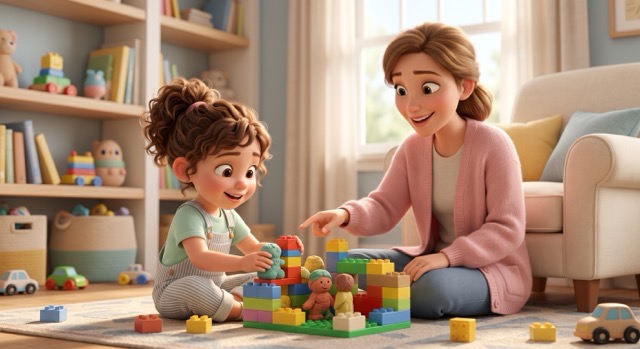
2) Building and Construction Games
Like: Lego – blocks – puzzles
Benefits:
- ✔ Develop logical intelligence
- ✔ Strengthen planning and problem-solving
- ✔ Build hand muscles (important for writing later)
💡 Tip: Start with simple models based on age, then gradually increase difficulty.
3) Daily Reading
One of the most important activities of all.
Benefits:
- ✔ Increase vocabulary
- ✔ Boost imagination and creativity
- ✔ Improve focus skills
- ✔ Strengthen emotional bond between mom and child
Read 10–15 minutes daily before bedtime.
4) Imaginative Play Games
Like: kitchen, doctor, grocery store, superheroes.
Benefits:
- ✔ Improve communication skills
- ✔ Strengthen emotional regulation
- ✔ Boost social intelligence
- ✔ Build the skill of “understanding others”
5) Memory and Focus Games
Simple but powerful activities.
Examples:
- Memory card game
- Finding differences
- Where did it disappear?
- Following two or three-step instructions
Benefits:
- ✔ Strengthen working memory
- ✔ Increase mental processing speed
- ✔ Improve attention skills
6) Drawing and Coloring
Even if it’s “scribbles”… it’s food for the brain.
Benefits:
- ✔ Increase connection between brain halves
- ✔ Develop fine motor skills
- ✔ Enhance creativity
💡 Use varied tools: wooden colors, crayons, watercolors, brushes, sponges…
7) Daily Physical Activities
Children don’t learn well if they stay seated all day.
Examples:
- Jumping
- Dancing
- Running
- Balancing on a drawn line
- Skipping rope
Benefits:
- ✔ Improve brain balance
- ✔ Stimulate neural growth
- ✔ Improve body control
8) Musical Activities
Singing – clapping – drums – repeating rhythms
Benefits:
- ✔ Improve memory
- ✔ Develop language
- ✔ Boost listening skills
- ✔ Regulate internal rhythm (helpful for reading later)
9) Group Games
Considered early training for emotional intelligence.
Examples:
- Taking turns
- Waiting for your turn
- “Hide and seek” game
- Group role-playing
Benefits:
- ✔ Understand rules
- ✔ Develop sharing skills
- ✔ Improve social problem-solving
10) Simple Brain Exercises
Like:
- Touching nose and knee
- Switching between hands
- Walking on a line
- Connecting dots
Benefits:
- ✔ Strengthen neural connections
- ✔ Improve eye-hand coordination
- ✔ Support writing and reading skills later
Activities that build a child’s brain aren’t complex—they’re simple, daily, and easily done at home. Because the brain grows through experience, exploration, and purposeful play—not by lecturing or sitting long hours in front of screens. Invest just 15–30 minutes daily, and you’ll notice a clear improvement in your child’s abilities.
Our Blog

Parenting an Only Child: Challenges and Practical Solutions for Parents
Smart Screen-Free Alternatives to Keep Your Child Busy for Hours | Practical Ideas for Moms