









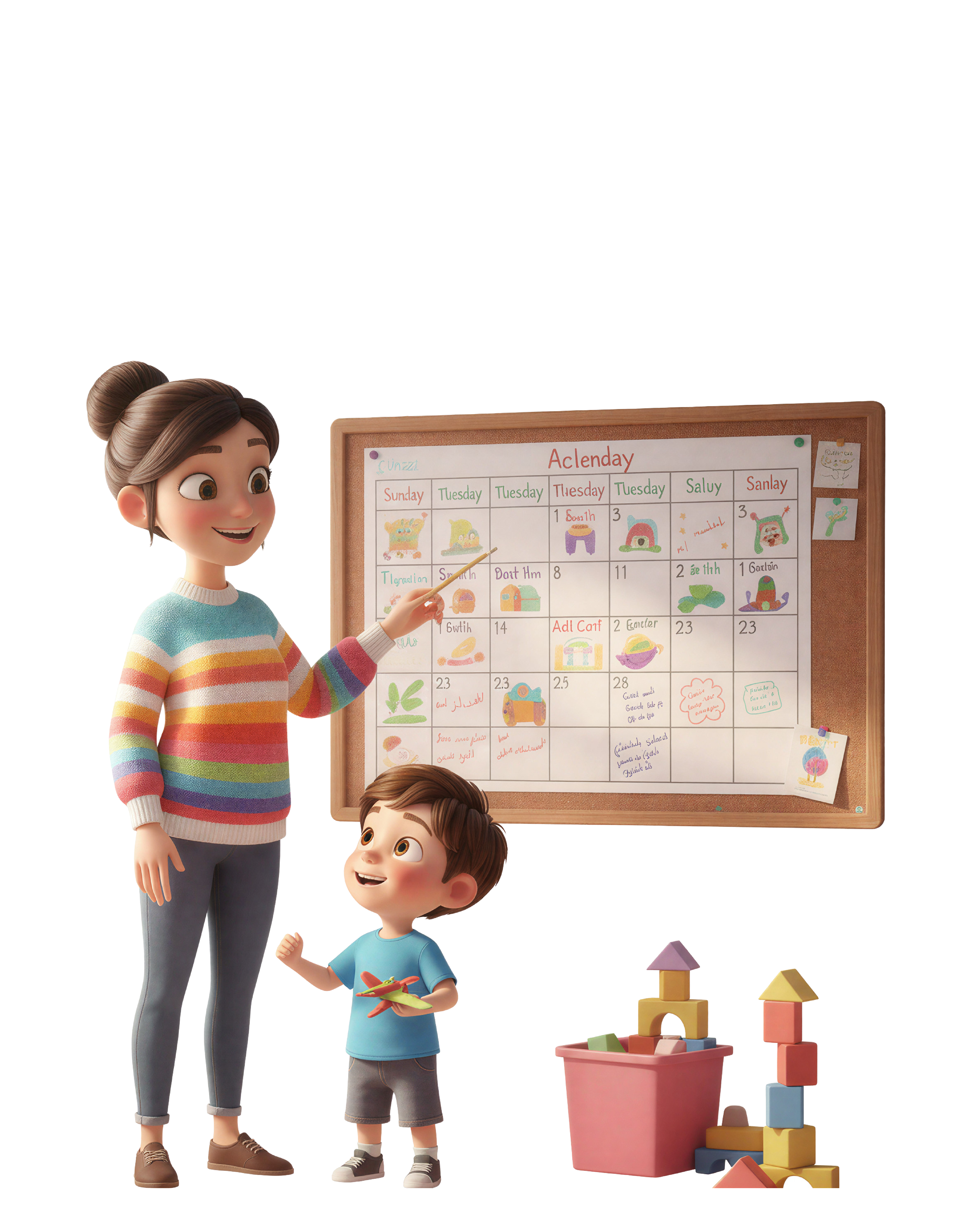
Planning a schedule for your child’s activities is not just about arranging times; it is a way to build their personality and develop their skills in a balanced manner. By organizing your child’s time between learning, play, physical activity, and creativity, they can achieve well-rounded growth and become more confident and independent. In this article, we will explore practical steps to plan a balanced weekly schedule that covers all aspects of your child’s development.
1) Balancing Activities:
- The child’s weekly schedule should include a variety of activities covering educational, recreational, physical, and creative aspects to develop their skills in a well-rounded and comprehensive way.
2) Free Play Time:
- It is important to allocate time for unstructured free play, which enhances the child’s creativity and exploration.
3) Educational Activities:
- Daily Reading: Set aside daily time to read a story with your child.
- Teaching Numbers and Letters: Using simple games or educational apps.
4) Physical Activities:
- Walking or cycling: for 30 minutes daily.
- Active games: such as jumping rope, running, and playing ball.
5) Creative Activities:
- Drawing and Coloring: Encourage your child to express themselves through art.
- Crafts: such as shaping clay or cutting and pasting paper.
6) Social Activities:
- Playing with Friends: Whether at home or in the park.
- Visiting Relatives: To strengthen social bonds.
7) Outdoor Activities:
- Family Outings: Such as going to the park or museums.
- Nature Exploration: Such as collecting leaves or stones.
8) Simple Household Activities:
- Participating in Household Chores: Such as tidying up toys or helping set the table.
- Teaching Simple Skills: Such as tying shoes or organizing clothes.
9) Screen Time:
Screen time should be limited and guided educationally through:
- Educational Apps: For 20–30 minutes daily.
- Watching Educational Programs: Such as purposeful cartoons.
10) Relaxation Activities:
- Yoga or Meditation for Children: To teach your child how to relax.
- Quiet Time: Such as listening to calm music or reading.
11) Variety:
- Rotate activities weekly to prevent boredom and provide new learning opportunities.
12) Involving the Child in Planning:
- You should consult your child and ask about the activities they prefer, and include them in the weekly schedule.
13) Flexibility:
- The parent should be flexible in implementing the schedule, as the child may need to adjust activities based on their mood.
14) Family Time:
- Family Games: Such as board games or puzzles.
- Shared Activities: Such as cooking together or planting flowers.
15) Regular Sleep:
The child’s weekly schedule should include sufficient time for sleep to ensure their health.
Planning a child’s activity schedule requires balance, flexibility, and the child’s participation. By paying attention to their educational, physical, creative, and social activities, a child can grow healthily and happily while acquiring valuable life skills. Remember, the goal is not strict adherence to the schedule, but creating a stimulating environment that allows the child to explore, learn, and enjoy each day.